
TOPS Surgical Specialty Hospital
If you click the 'Continue' button, you will be leaving this website. To stay here, click the 'Cancel' button.
What Happens During a Colonoscopy A Patient Guide
What Happens During a Colonoscopy? A Patient Guide
Mon Sep 21 2026A colonoscopy allows a physician to examine the lining of the colon and rectum using a flexible instrument with a small camera.
For patients researching colonoscopy services in Houston, understanding the process, from preparation through recovery, can make the experience easier to anticipate.
Preparing for a Colonoscopy
Preparation begins before the procedure.
The physician provides instructions about food, beverages, and bowel preparation. Following these instructions carefully helps clear the colon so the physician can examine the intestinal lining.
Patients should provide information about medications, allergies, medical conditions, and previous procedures.
If sedation or anesthesia is recommended, patients should follow the instructions provided by the medical team.
Arriving for the Procedure
On the day of the colonoscopy, patients complete the necessary check-in and preparation steps before the procedure.
The medical team reviews relevant health information and discusses the planned sedation or anesthesia.
Patients should arrange transportation home when sedation or anesthesia is used because they may not be able to drive afterward.
What Happens During the Colonoscopy?
During the procedure, the physician gently guides a colonoscope through the rectum and into the colon.
The camera allows the physician to examine the intestinal lining and look for abnormalities such as polyps, inflammation, ulcers, bleeding, or other changes.
If appropriate, the physician may remove polyps or perform another intervention during the examination.
TOPS states that a colonoscopy generally takes approximately 30 to 45 minutes, although the total time at the facility may be longer because of preparation and recovery.
What Can a Colonoscopy Detect?
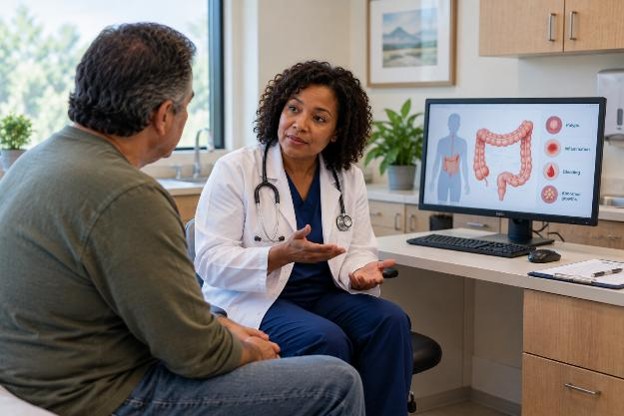
A colonoscopy can help physicians evaluate the colon and rectum for a variety of conditions.
These may include:
- Colorectal polyps
- Colorectal cancer
- Diverticulosis
- Diverticulitis
- Ulcers
- Other intestinal conditions
The findings can help the physician determine whether additional testing, treatment, or follow-up may be appropriate.
Recovery After the Procedure
After the colonoscopy, patients spend time in a recovery area while the effects of medication wear off.
Patients may receive instructions regarding eating, medications, activity, and follow-up care.
Because sedation or anesthesia can affect reflexes and concentration, patients should follow the care team's instructions regarding transportation and activity after the procedure.
When Is a Colonoscopy Recommended?
A colonoscopy may be used for routine colorectal cancer screening in appropriate patients.
It may also be recommended when a physician needs to investigate symptoms or an abnormal screening result.
TOPS's Direct Screen Colonoscopy Program is designed for eligible average-risk patients who meet the program criteria.
Patients should discuss their individual screening needs and symptoms with a physician.
Preparing for a Successful Experience
Understanding preparation instructions, arranging transportation when necessary, and providing an accurate medical history can help patients prepare for their colonoscopy.
Understanding the colonoscopy process can help patients prepare for their procedure and know what to expect. If you are considering a colonoscopy, visit our Direct Screen Colonoscopy services page to learn more about screening and preparation. Then scroll down the page to find the right physician near you.